Service
Mobile Application Design and Development
A mobile app earns its place on someone's home screen by being genuinely faster or simpler than the alternative. We start from the job the app is meant to do, design the flows around it, and build an interface that feels native to the device rather than a website in a shell.
- Phone and tablet layouts
- Offline-aware behaviour
- Store-ready releases
What this service includes
- Product definition and user flow mapping
- Interface design for phone and tablet form factors
- Application development with offline-aware behaviour
- Bilingual interfaces with correct RTL mirroring
- Store-readiness preparation and release checklists
- Post-release monitoring and iteration
Typical project types
- Customer-facing service apps
- Field and delivery apps for staff
- Booking and account companions to an existing service
- Internal tools that need to work away from a desk
Proven on our own product
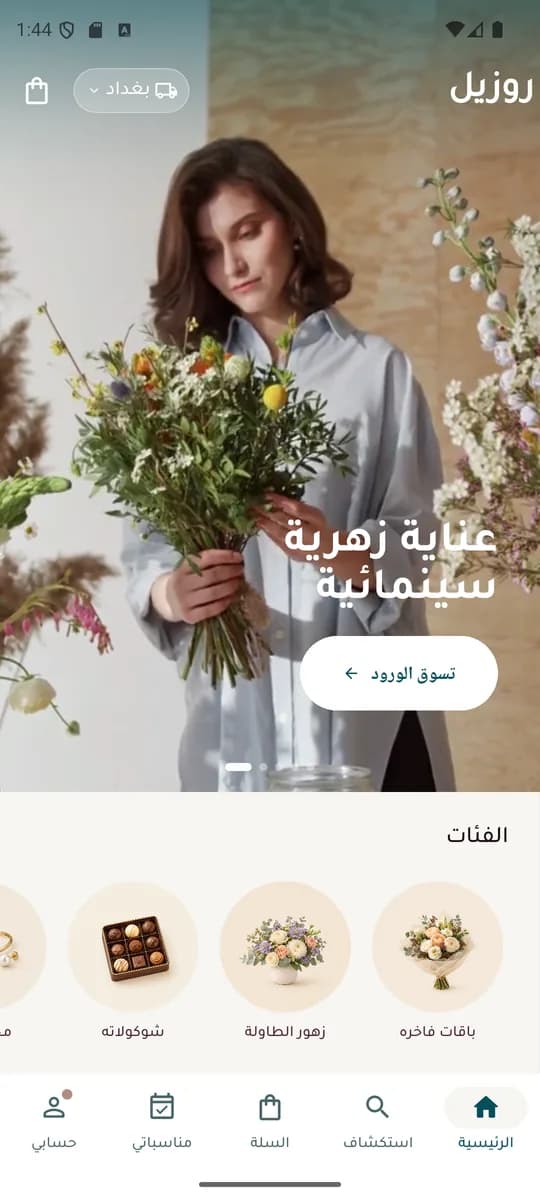
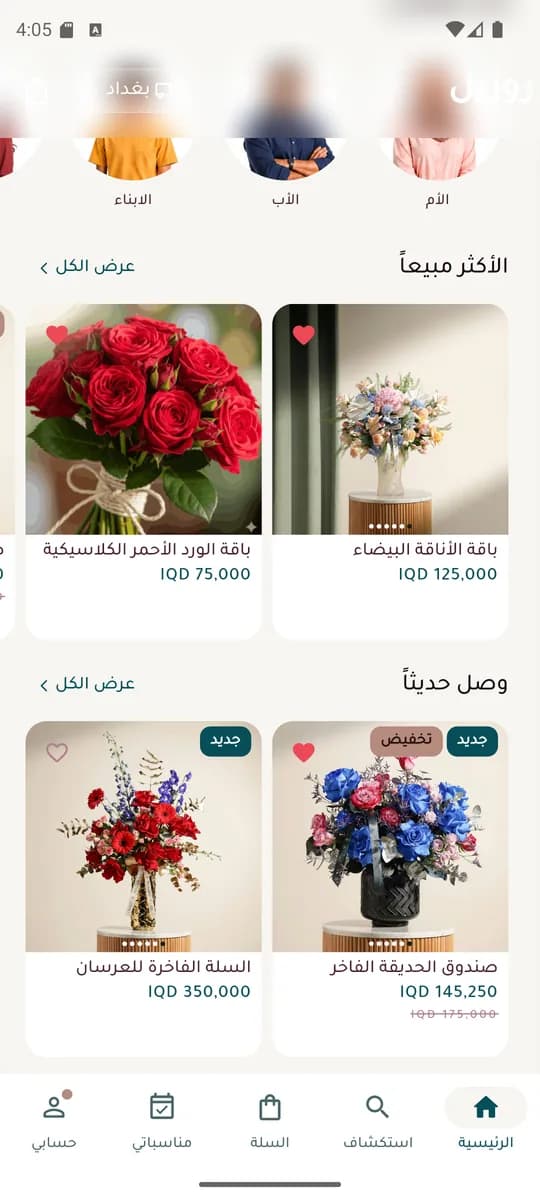
RUZEL runs on two applications with different audiences — a Customer App for shopping and gifting, and a Driver App for delivery in the field — built on one shared product model. The Customer App is shown here; the Driver App is presented in full in the case study.
How we run it
Stage 1
Discovery
We learn your business, your audience and the problem worth solving before a single screen is drawn.
Stage 2
Planning
Scope, structure, priorities and timeline become explicit, so the build has a map instead of a guess.
Stage 3
Design
Interface, identity and interaction come together into a system your product can grow inside.
Stage 4
Development
We build in reviewable increments on modern foundations, with quality checks running throughout.
Stage 5
Testing
Functionality, responsiveness, accessibility and performance are verified on real devices.
Stage 6
Launch
Deployment, domains, analytics and handover documentation — released carefully, not hopefully.
Stage 7
Support & Growth
Maintenance, monitoring and the next set of improvements, guided by how people actually use the product.
Other gateways
Ready to start this one?
Tell us what you are trying to build and we will map the route from here to a live product.