

Case study
IvaGate productRUZEL — one product, four connected surfaces.
RUZEL is a gift and flower delivery product owned by IvaGate and developed by its specialist teams. It is not a single application: a public website introduces it, a Customer App sells through it, a Driver App delivers through it, and an Admin Dashboard operates all three.
- Website
- Mobile apps
- Admin dashboard
- Bilingual

What RUZEL is
A customer finds a gift on the website or in the app, completes it with add-ons, and places an order. That order is prepared, checked and assigned to a driver, who works from it in the field. The operations team sees the whole flow in one dashboard. Each surface is designed for one audience, and all four are built as a single product rather than four separate projects.
The screenshots on this page are from the live product. Private values — names, phone numbers, addresses, order references, financial figures and precise locations — are blurred. Interface labels, structure, status indicators and public product information are untouched.
Four surfaces, one system
The same catalogue, the same orders and the same delivery windows appear across all four surfaces. That is what lets an order move from a customer's phone to a driver's route and stay visible to the operations team throughout, without being re-entered anywhere along the way.
- 01
RUZEL Website
Public marketing site
- 02
Customer App
Shopping and gifting
- 03
Driver App
Field delivery
- 04
Admin Dashboard
Operations and oversight
Public marketing site
The public website
A bilingual marketing site that introduces the brand, presents the collections and points visitors to the applications. Arabic and English are both first-class: the navigation, the collection switcher and the whole layout mirror between right-to-left and left-to-right rather than being merely translated.
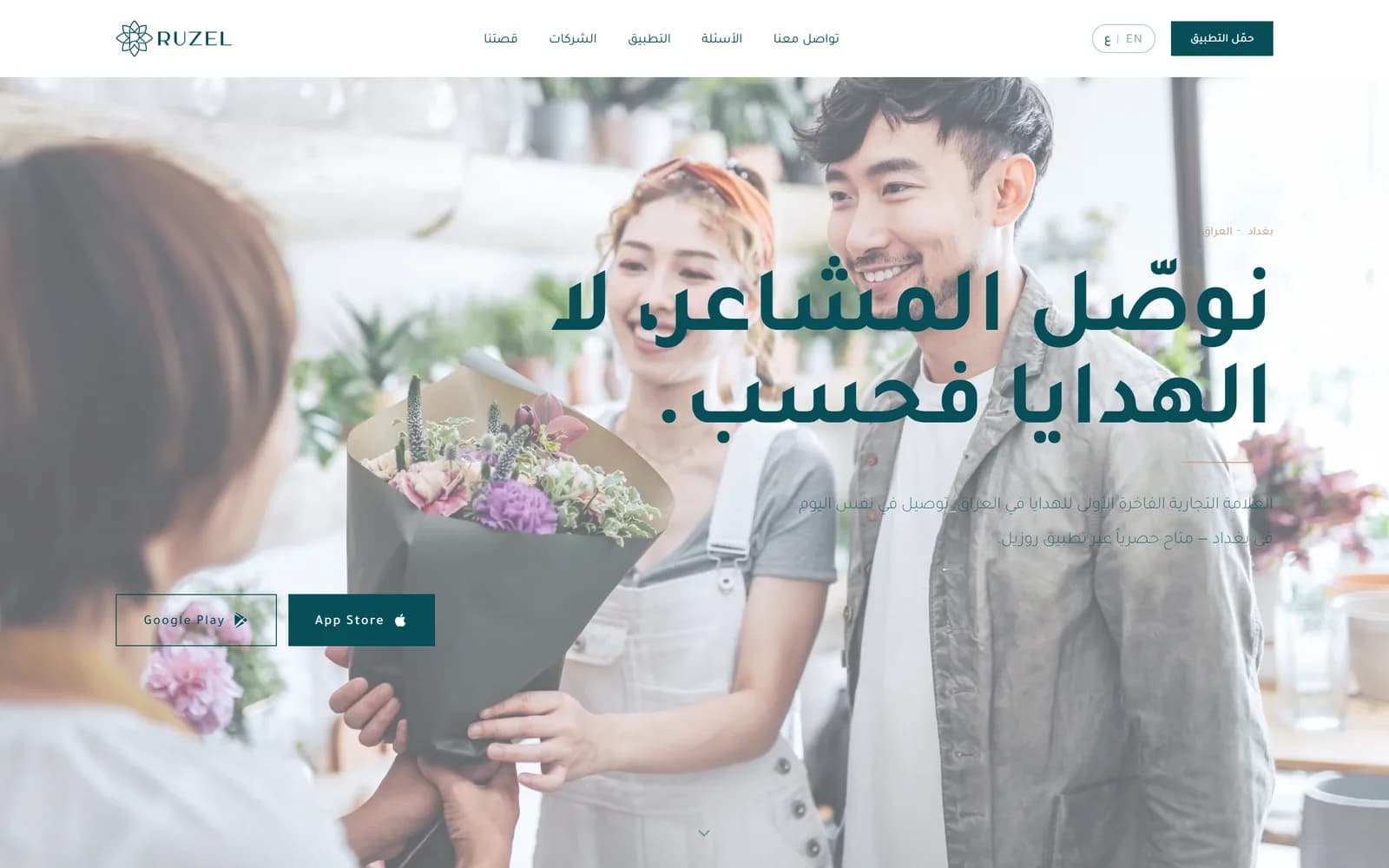
The same page in Arabic — navigation, language control and buttons all mirrored. 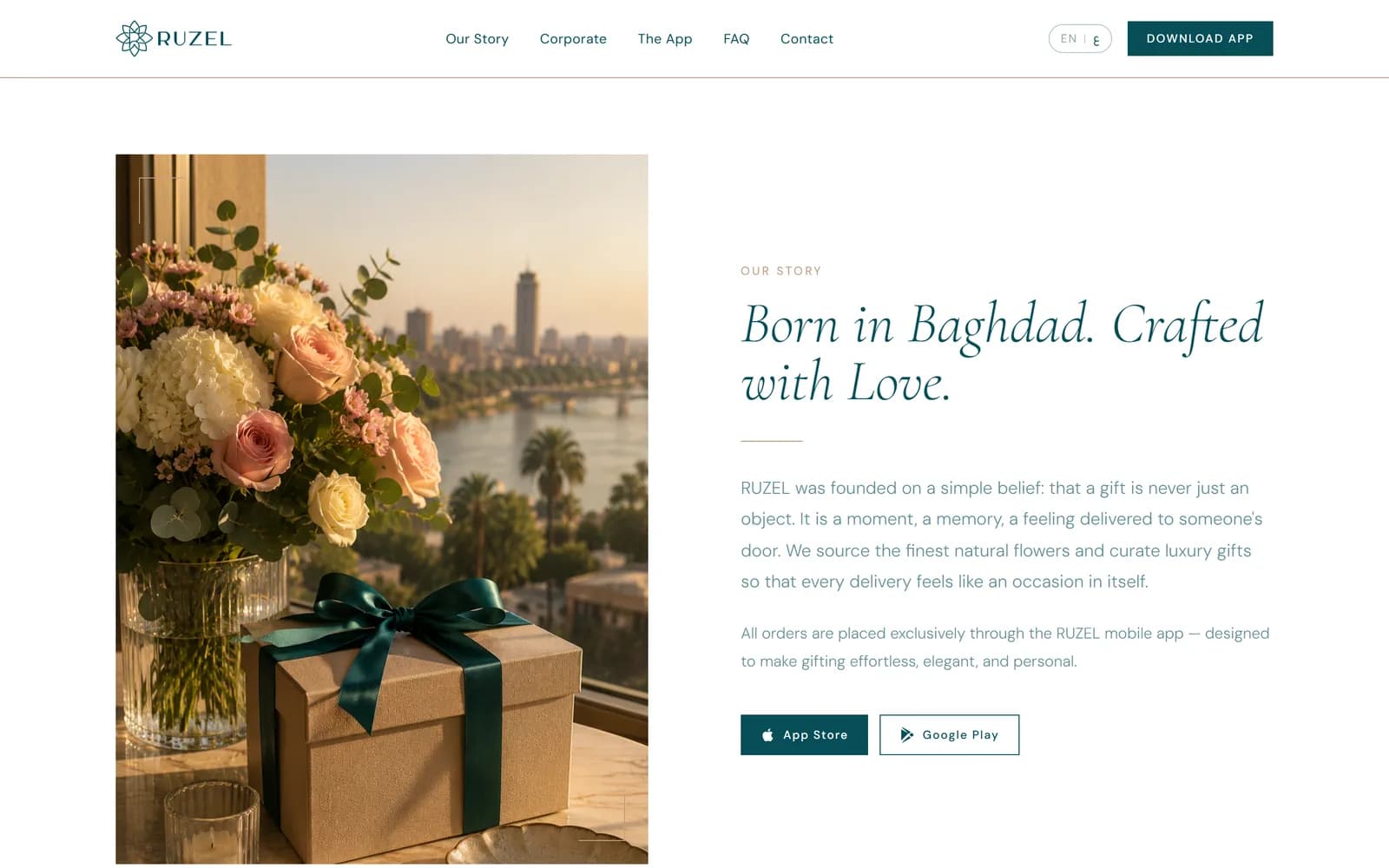
The brand story section, and where the site states that ordering happens in the app. 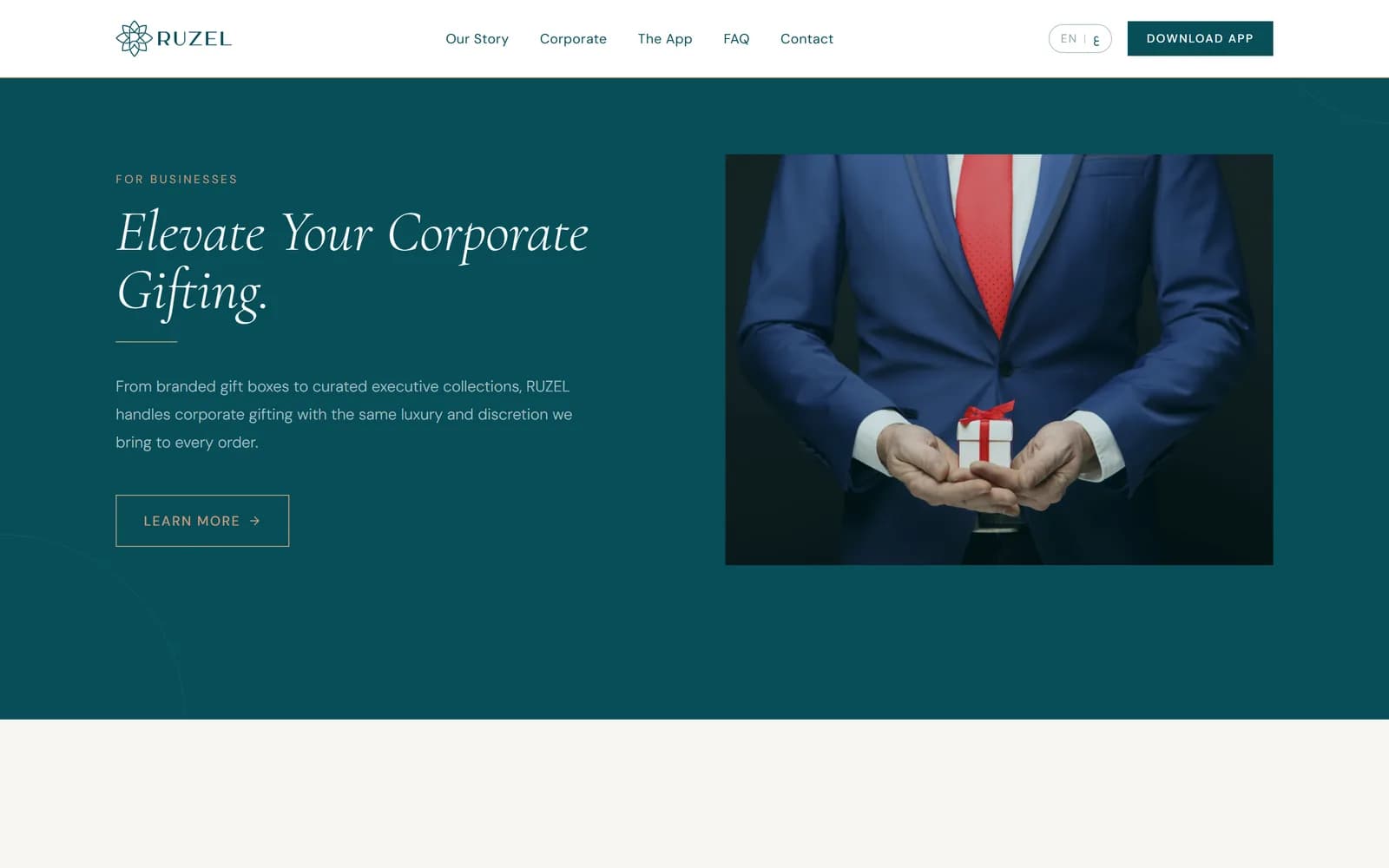
The corporate gifting proposition, on its own full-width surface.
Shopping and gifting
The Customer App
The storefront. Products are discovered three ways — by category, by occasion and by recipient — and a product page carries add-ons so a gift can be completed in one place. The filter sheet exposes the full taxonomy the catalogue is built on.
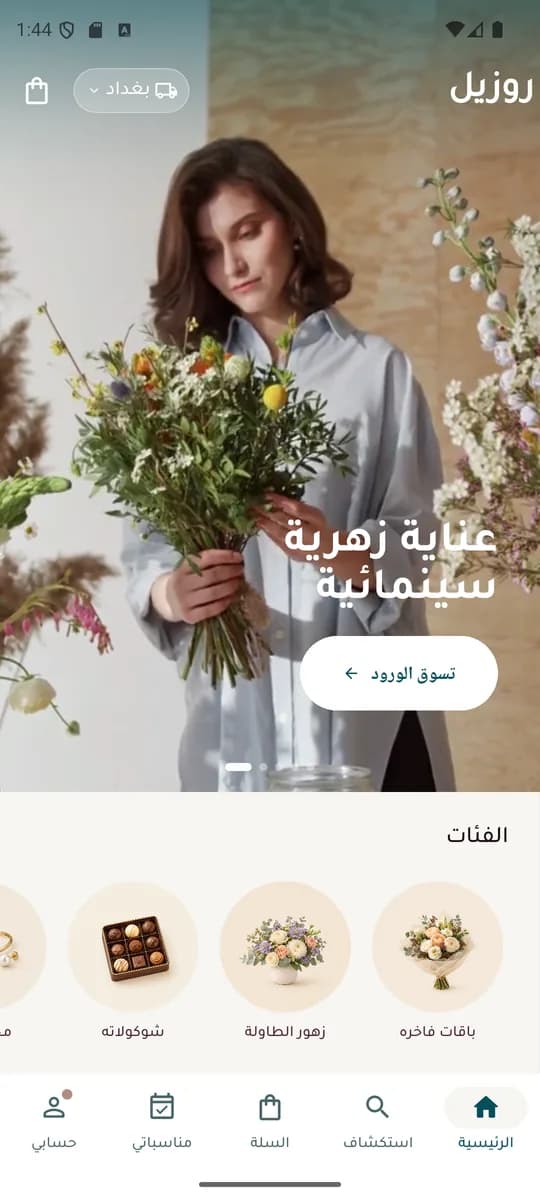
The Customer App home screen, opening on the product's own banner video. 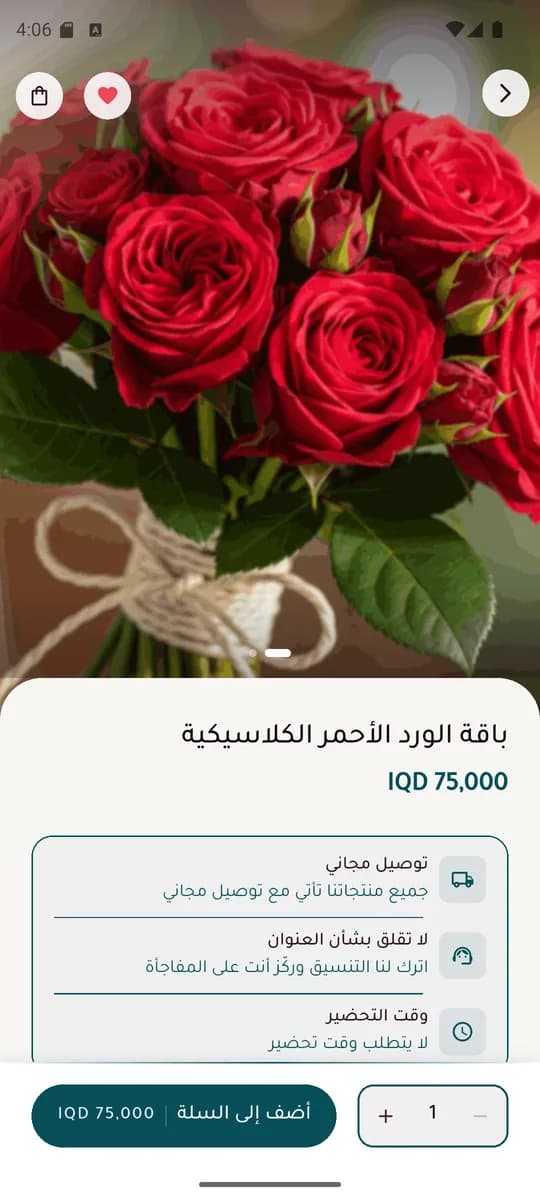
The product page: imagery, reassurance rows and a persistent action bar. 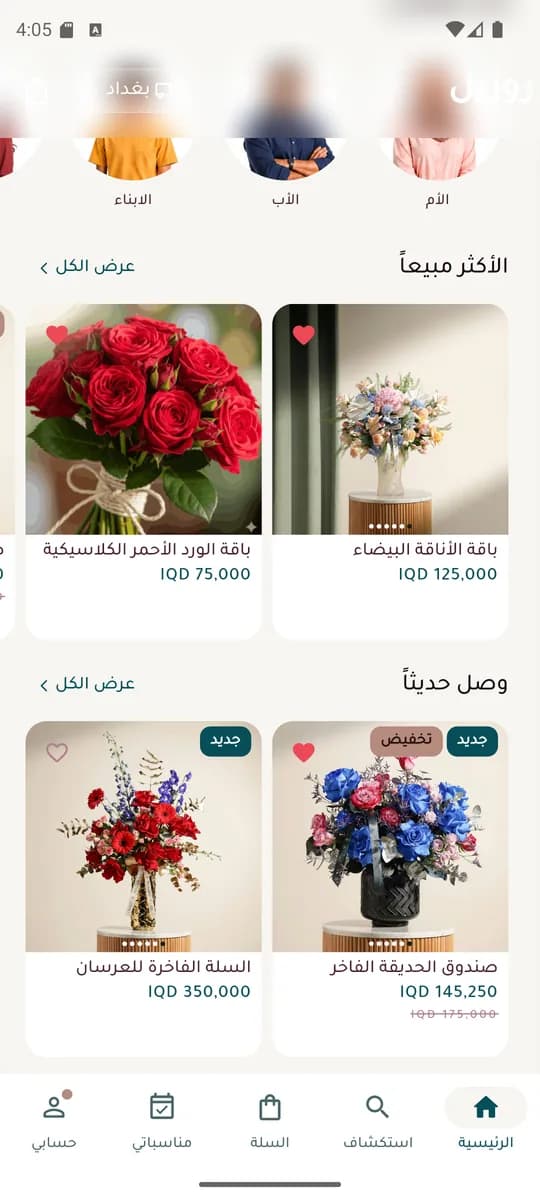
The product-card system, with its badge and pricing variants. 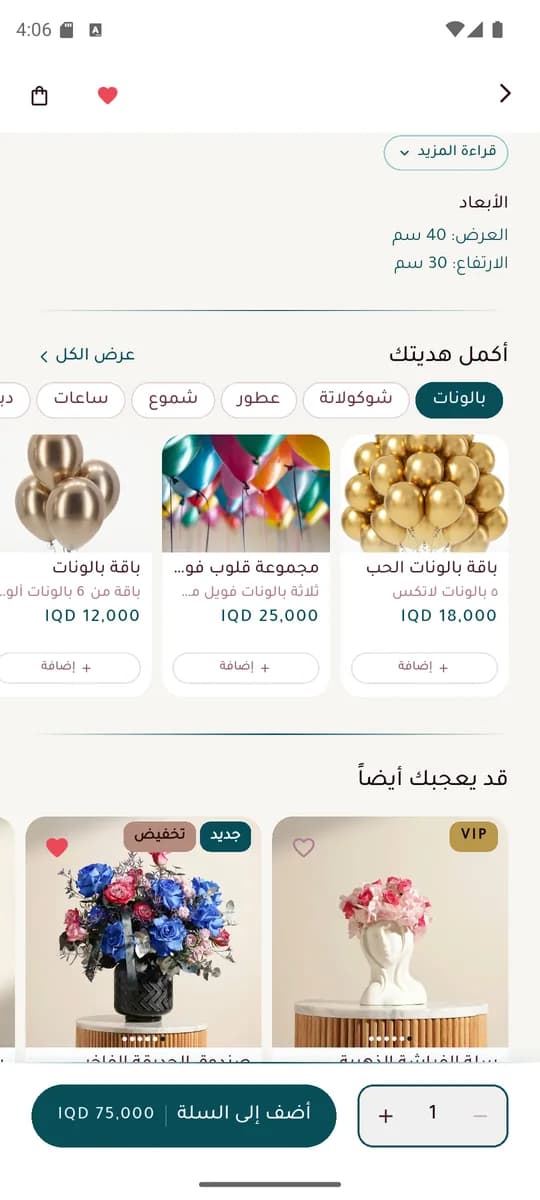
Add-ons let a gift be completed without leaving the product page.
Field delivery
The Driver App
The delivery task expressed as one screen with an unambiguous next step. Work is split across status tabs, the order detail carries a labelled recipient block and the quick actions a driver needs, and the contents sheet itemises products, paid add-ons and the approved preparation photos.
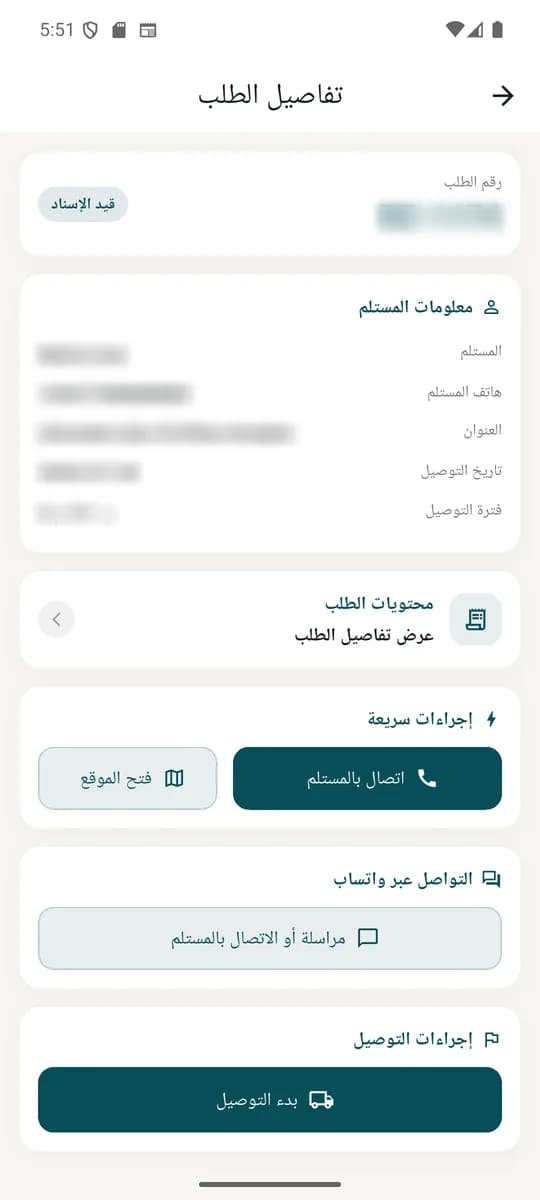
The whole field task on one screen, with a single unambiguous next step. 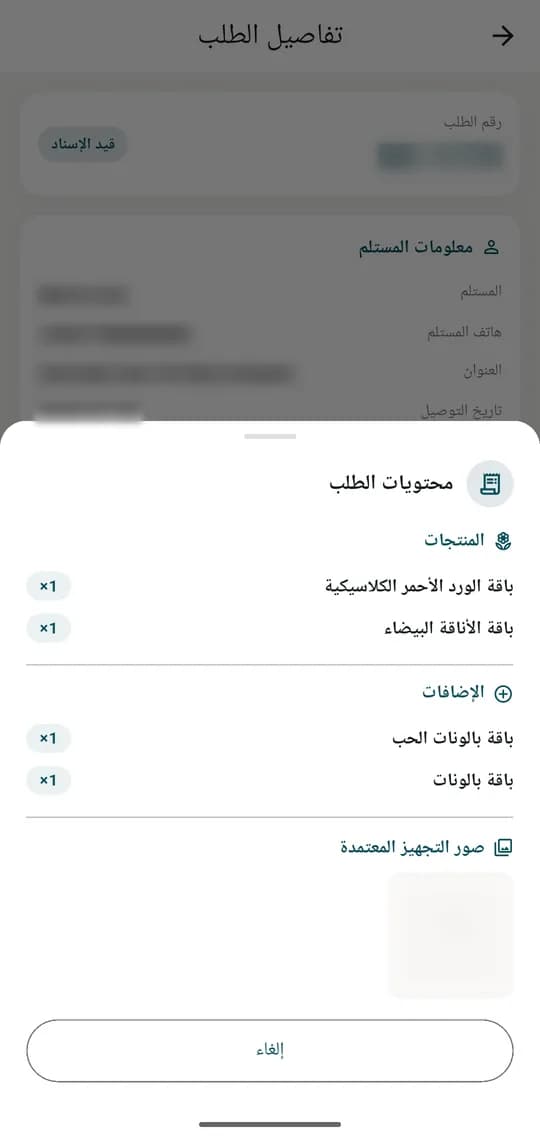
Products and paid add-ons are itemised separately, with the approved preparation photos. 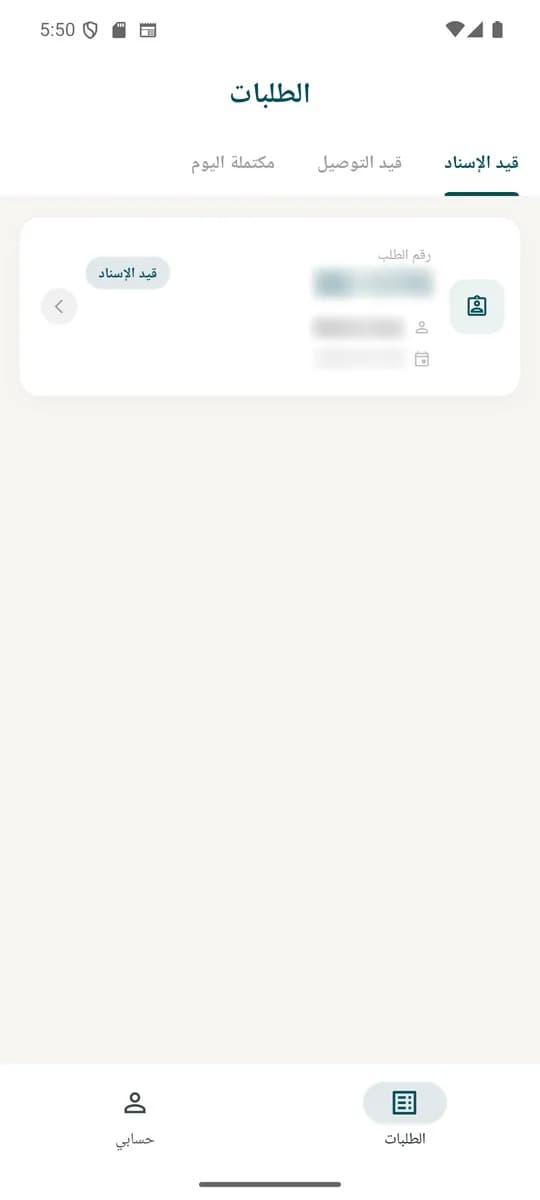
The driver's queue is the navigation — three status tabs, one card shape.
Operations and oversight
The Admin Dashboard
Where the business is run. An operational overview with a five-stage order pipeline, a filterable order table, catalogue management, reporting and a financial centre — plus delivery regions and delivery windows, which is where the promise the storefront makes is actually configured.
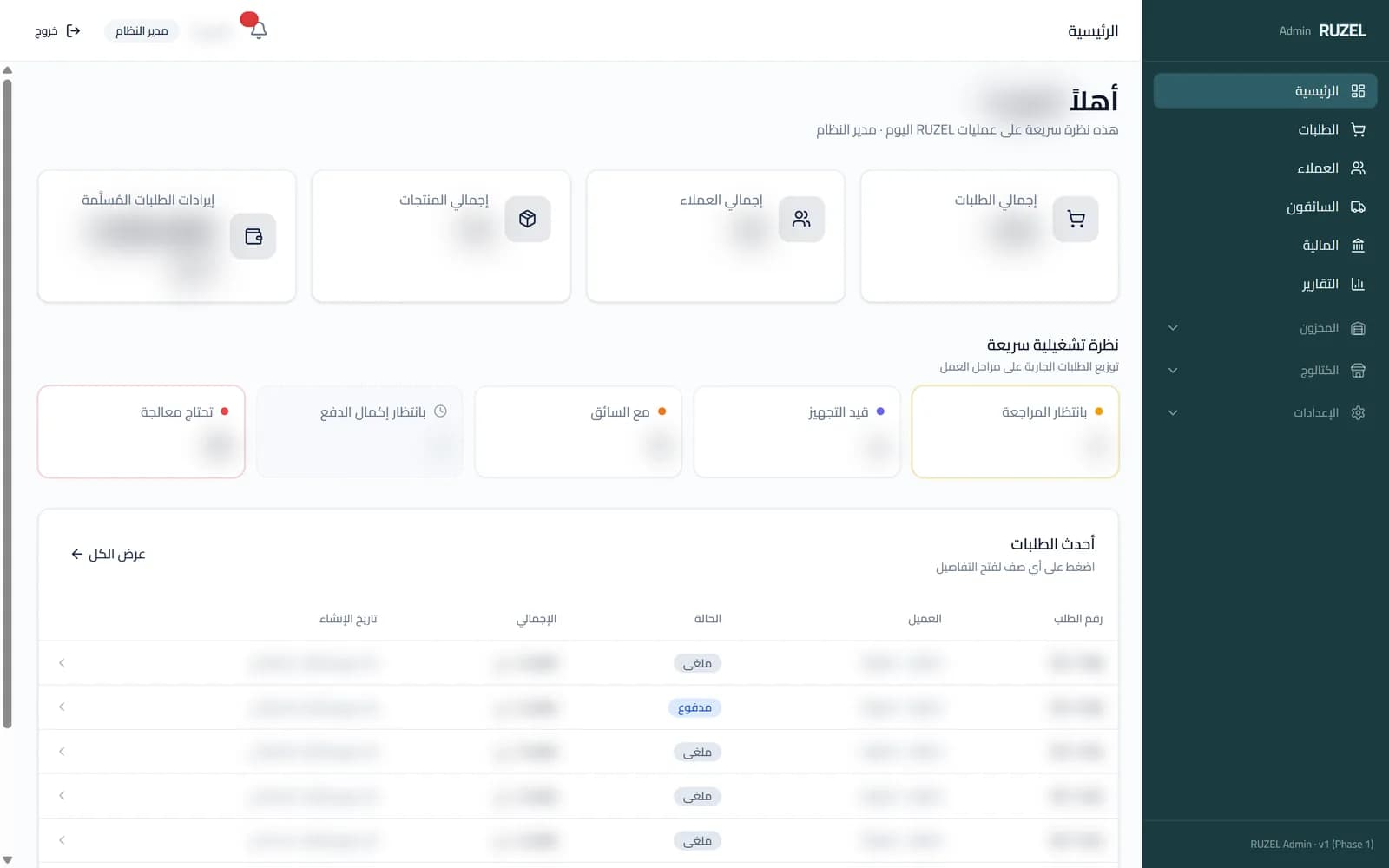
The operational overview. The pipeline strip is how the business actually runs. 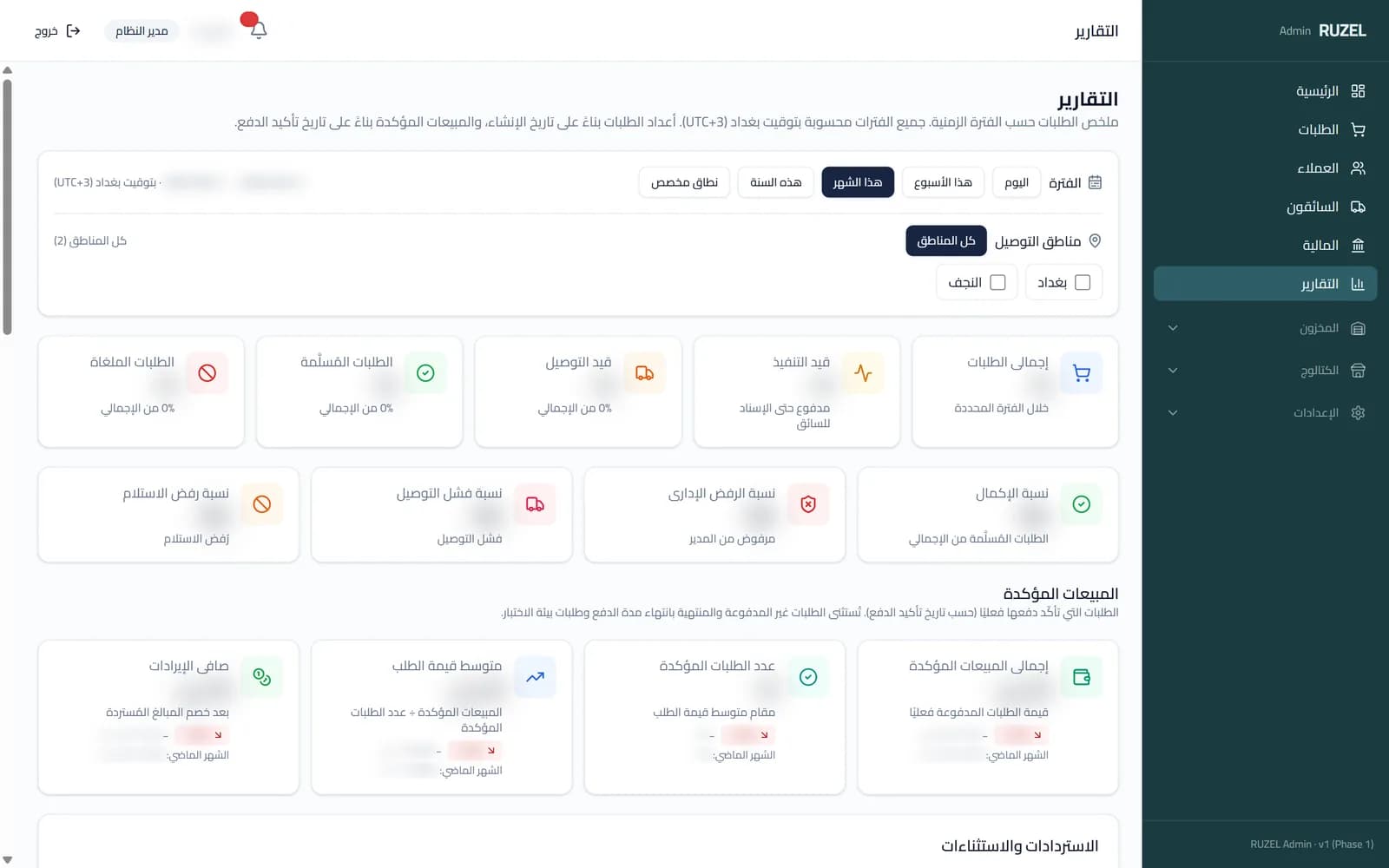
Reporting, with a period selector and a delivery-region filter above every figure. 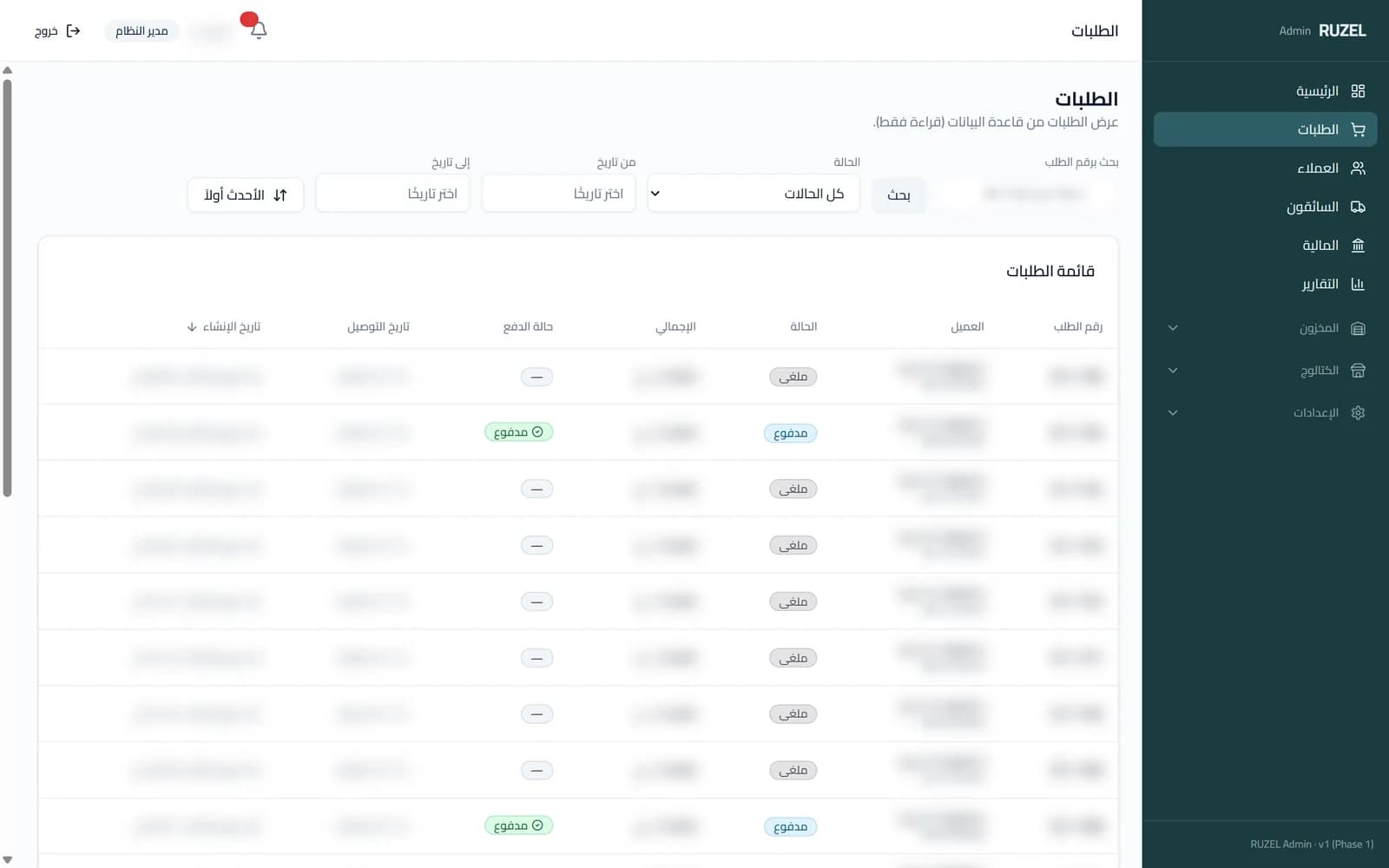
The order table and its filters, carrying two independent status systems. 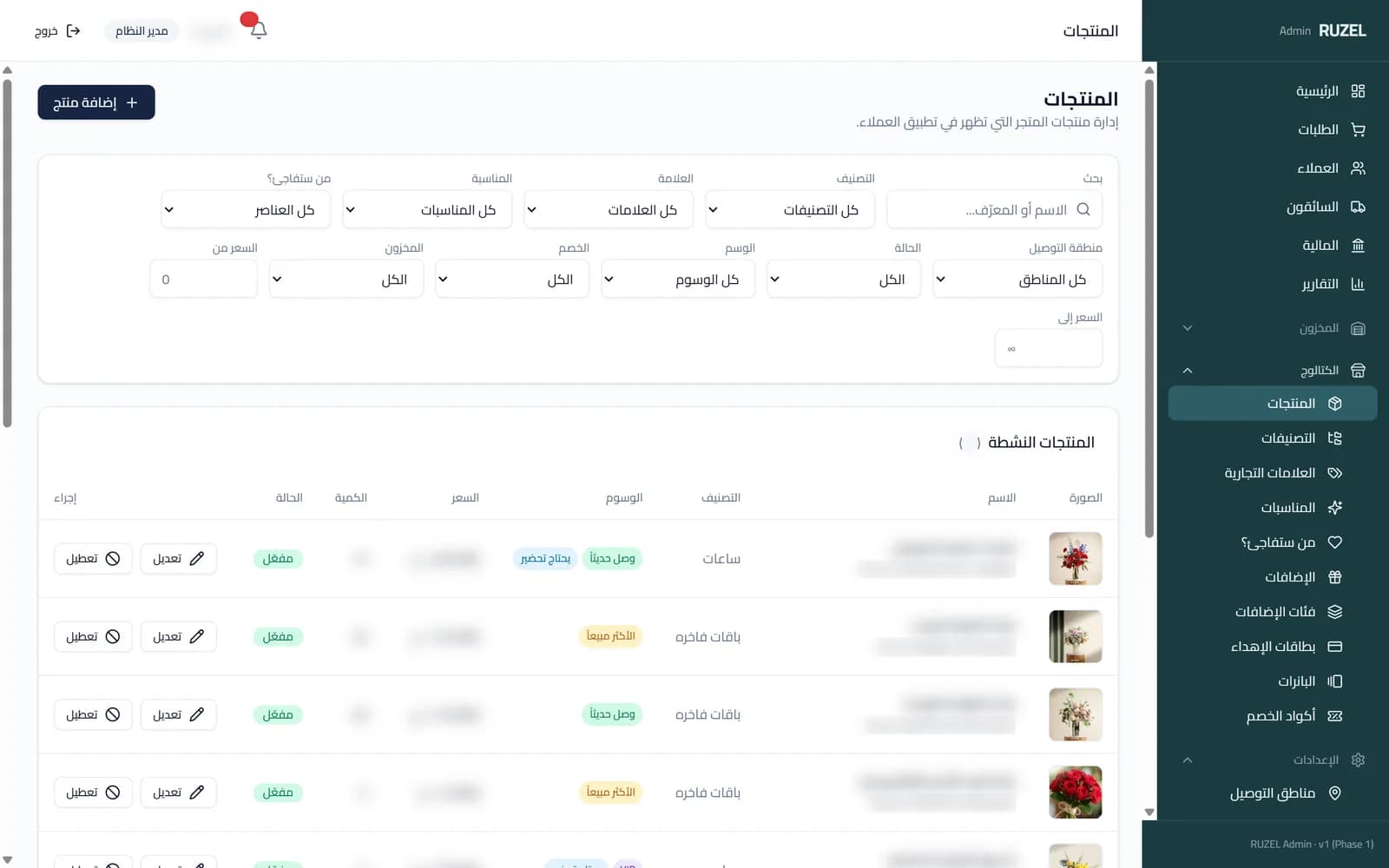
Catalogue management — the admin side of the taxonomy shoppers browse. 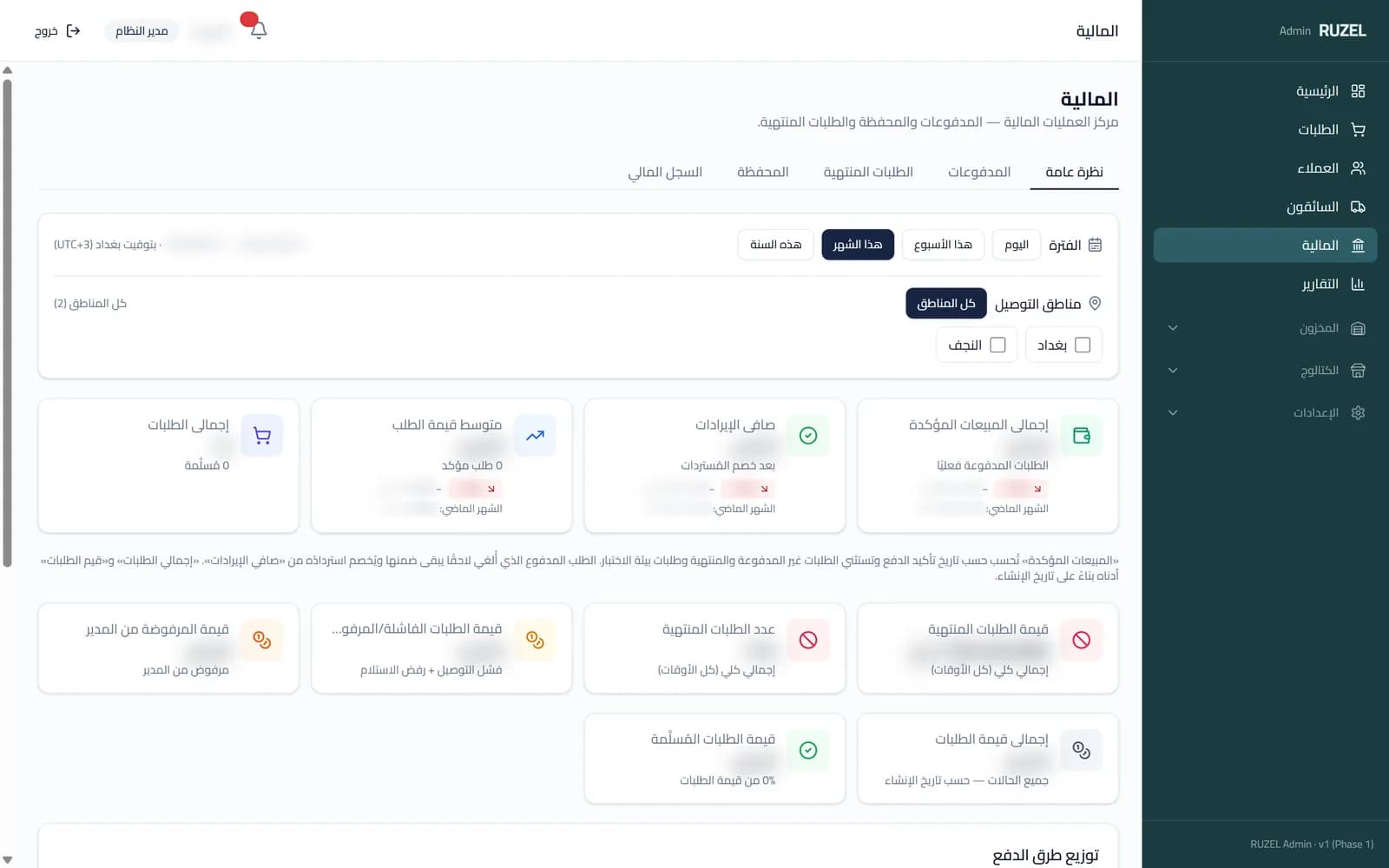
The financial centre: five tabs, with every figure blurred and the structure intact.
One interface system, two reading directions
The same components, spacing and type scale run through the website and both applications, so the product reads as one thing rather than four. Arabic is the interface language of the two apps and the dashboard, and the website carries Arabic and English side by side — mirrored structurally, so navigation, indicators and reading order all move, rather than being flipped visually.
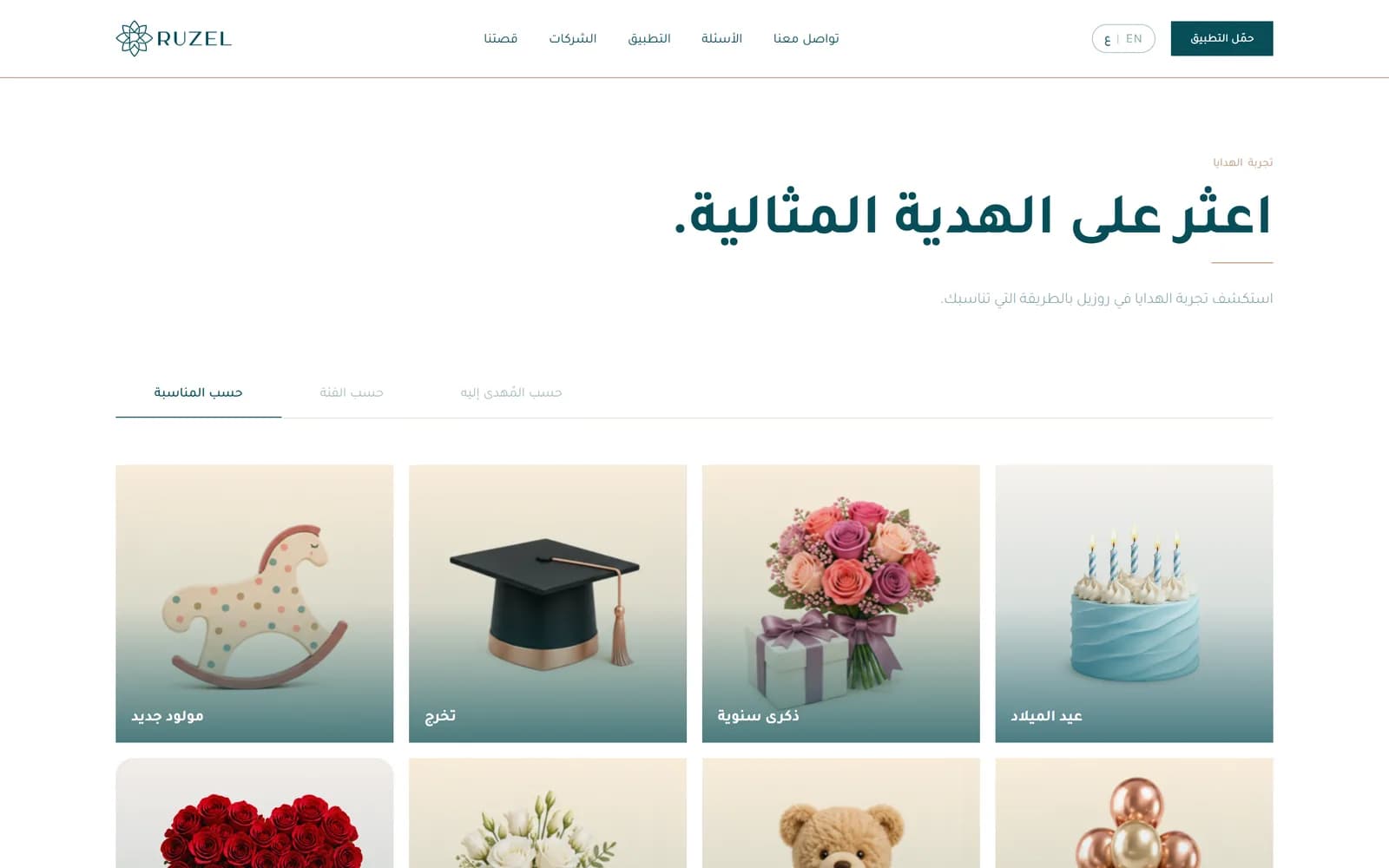
The three-way discovery model in Arabic — the same axes the Customer App uses. 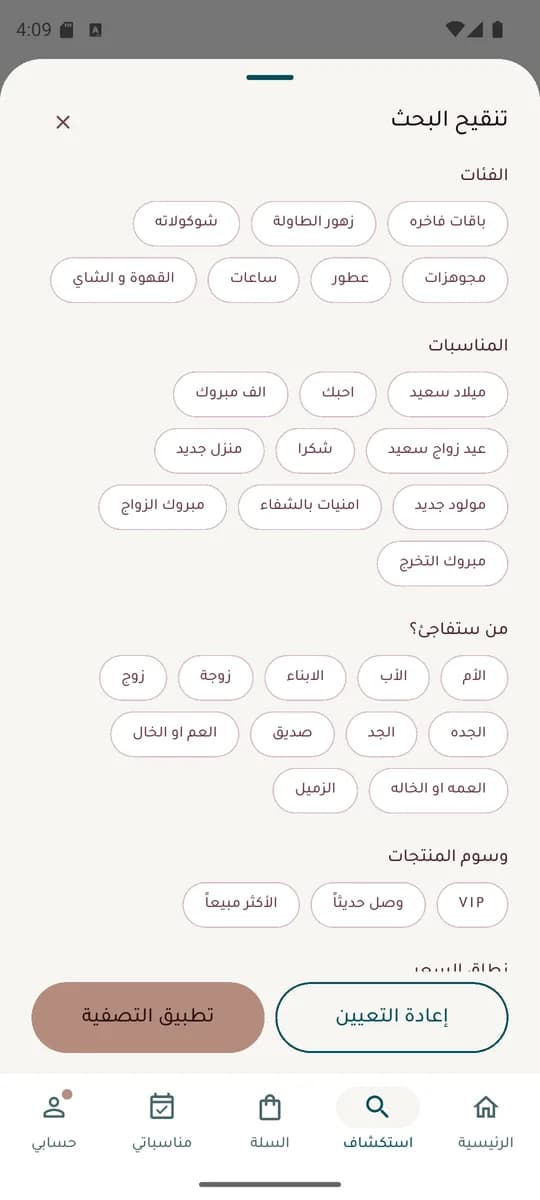
The filter sheet — the catalogue's full taxonomy in one surface.
How an order moves through the system
Four steps, each owned by a different surface, and none of them a hand-off outside the product.
Discover
A customer browses the collections on the website or opens the app, and finds a gift by category, by occasion or by recipient.
Order
The gift is completed with add-ons and placed. The order enters the pipeline the operations team watches.
Prepare and assign
The order is prepared, recorded against approved preparation photos, and assigned to a driver within a delivery window.
Deliver and oversee
The driver works from the order detail in the field, while the same order stays visible — with its status and its window — in the dashboard.
What IvaGate delivered
RUZEL was taken from analysis to a running product in-house. IvaGate's specialist teams covered every stage, and continue to operate and support it.
- Analysis and planning
- UI/UX design
- Website and system development
- Mobile application development
- Quality assurance
- Operation
- Maintenance
- Technical support
Building something with more than one moving part?
RUZEL started as one idea and became four connected products. Tell us what you are trying to build, and we will map the route from where you are to a working product.